
Copper & Brass Cookware
Copper carries heat about twenty-five times better than stainless steel, which is why it has been the metal of choice for slow-cooked dishes for generations. Every piece here is hand-spun and lined with tin by a kalaigar, so the surface your food meets is inert — and can be renewed when it wears, rather than thrown away.
Products
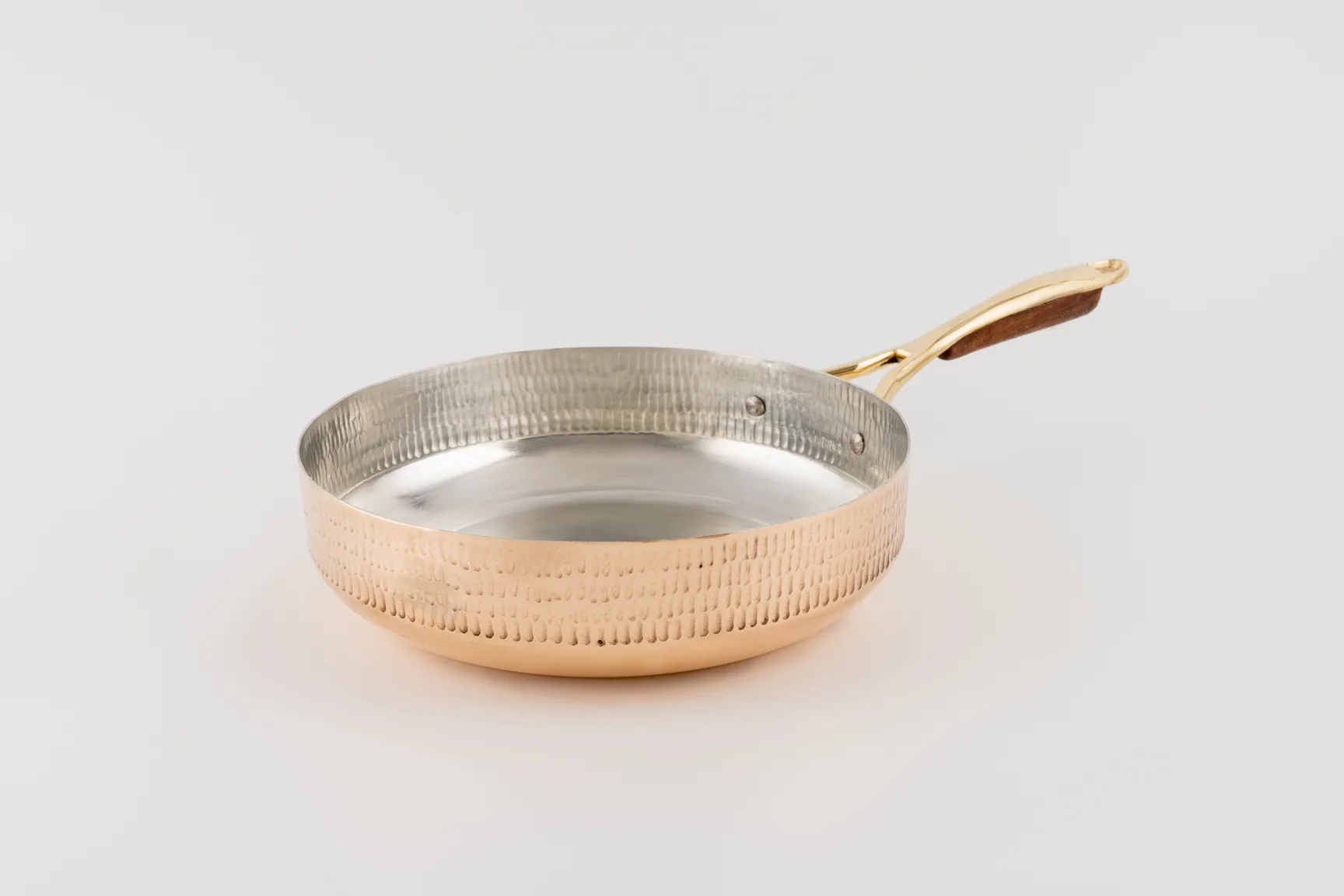
Copper Frying Pan with Brass & Wood Handle
Rs. 37,500
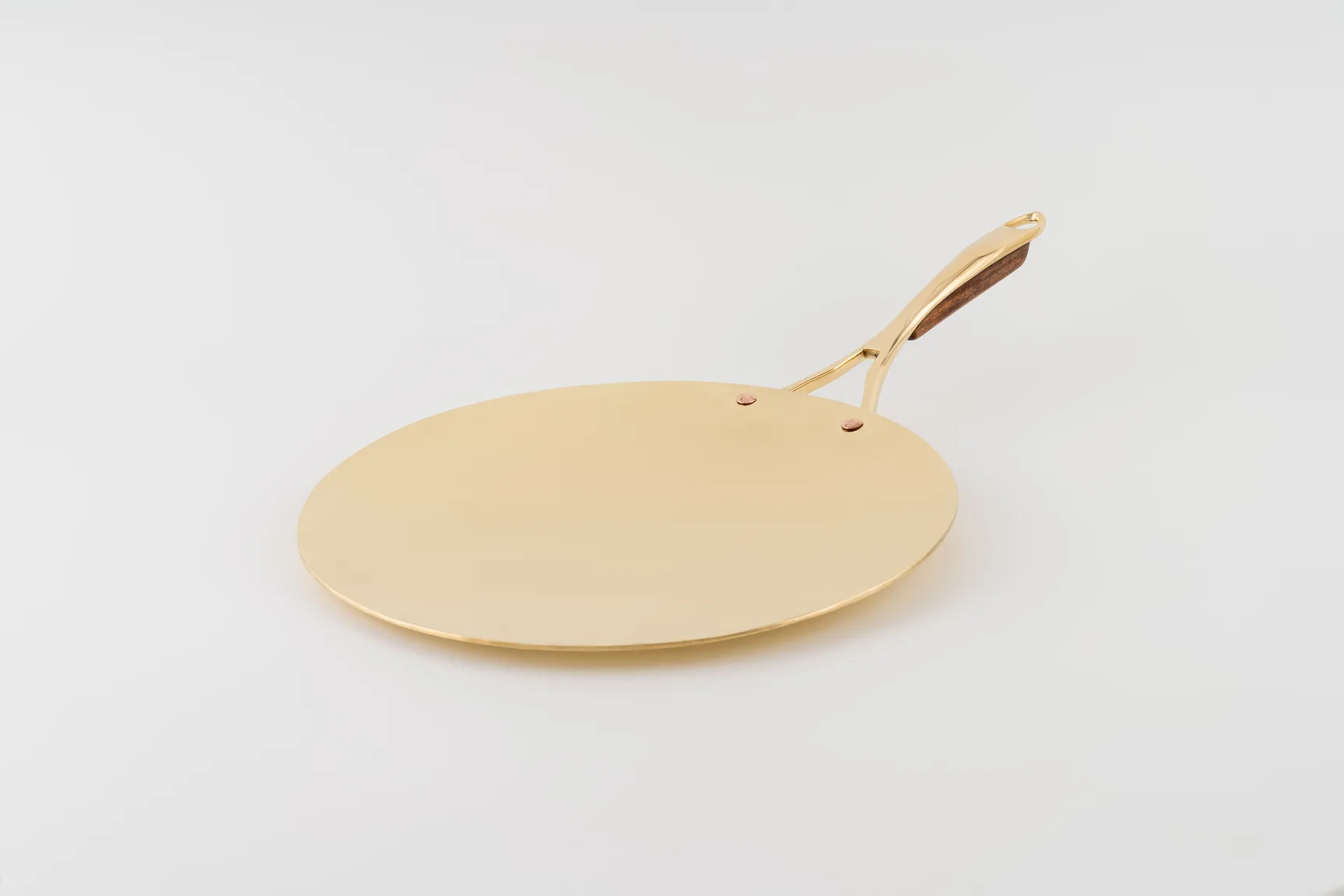
Brass Tawa with Brass & Wood Handle
Rs. 44,900
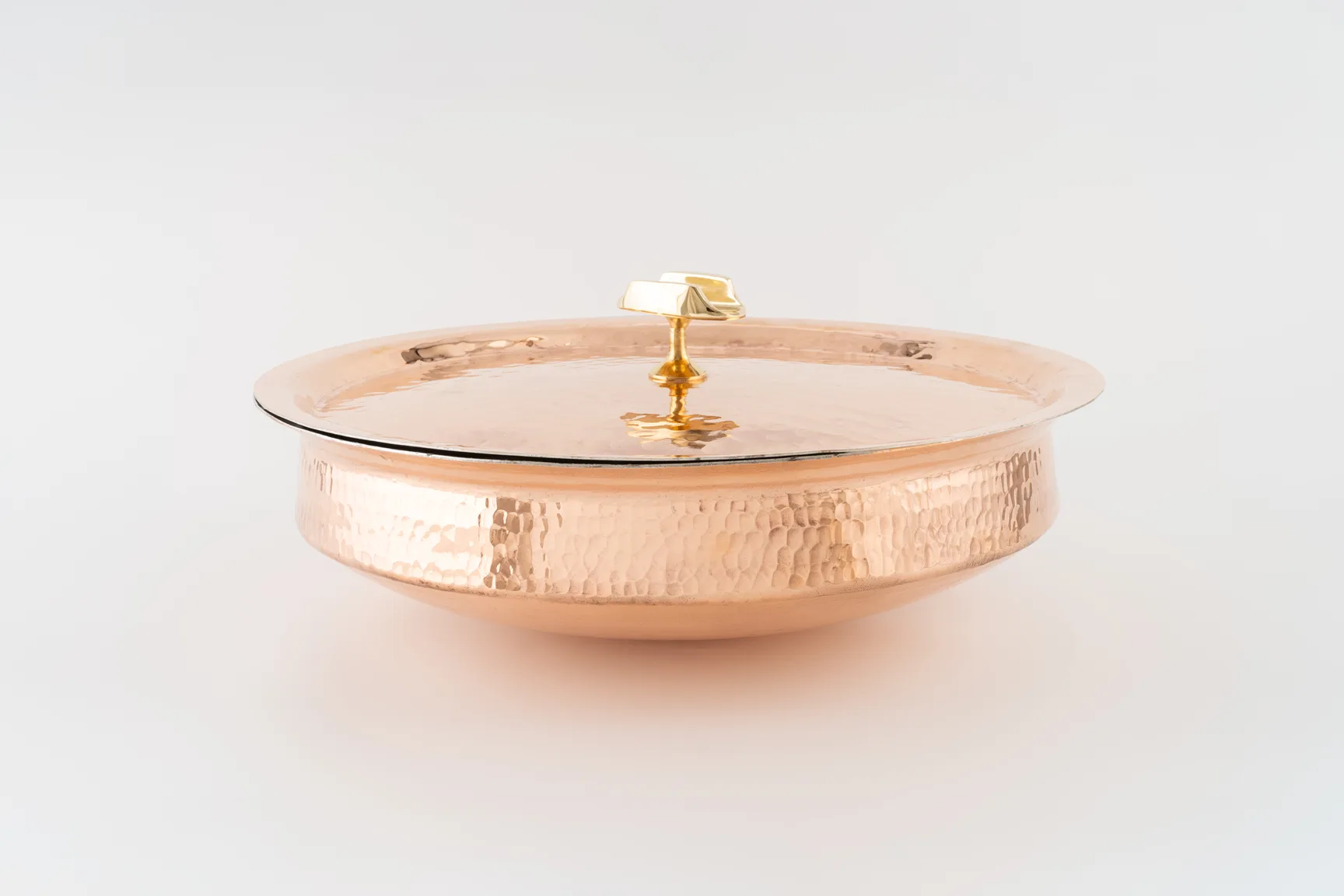
Handcrafted Copper Lagaan
Rs. 109,900
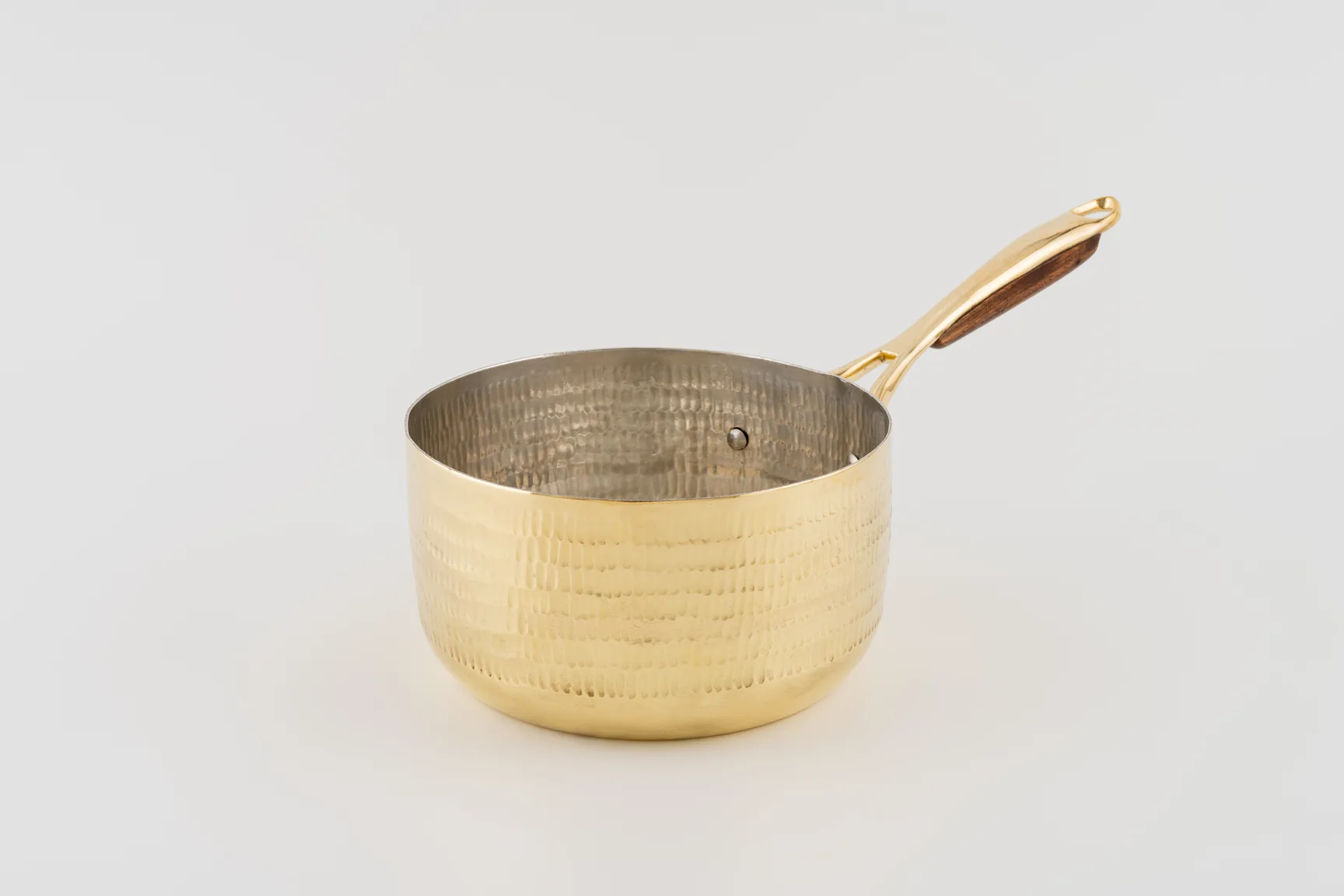
Raavi Brass Saucepan
Rs. 37,500
About Copper & Brass Cookware
Copper conducts heat roughly twenty-five times better than stainless steel. In practice that means the base of a copper pot reaches an even temperature quickly and holds it without hot spots, so a slow dish does not catch where the flame sits hardest. It also means you need less heat: low and medium are usually enough, and turning the flame down protects the lining.
Every cooking piece is lined inside with pure tin, applied by hand over heat — the process known as kalai. Bare copper reacts with acidic food, so the tin is what makes the vessel safe for tamarind, tomato and lemon. It is a consumable surface: with regular home cooking it lasts roughly one to two years, and a kalaigar renews it for a small fee. A synthetic non-stick pan, by contrast, is finished once its coating degrades.
The range covers the pieces a Pakistani kitchen actually uses — the lagaan for biryani and slow-cooked meat, saucepans for daily cooking, a frying pan, and a brass tawa for roti. The tawa is the one exception to the lining: it is finished in bare brass, as a tawa traditionally is.
Tambe ke bartan and pital ke bartan have been made this way in Punjab for generations. These are hand-spun rather than pressed, so no two are identical, and small variations in the hammering are a record of how the piece was made rather than a fault.



Did you know?
Copper and brass develop a natural patina over time — a sign of authenticity. With simple care, your Raavi pieces can shine for generations.